Support Doctors Without Borders in Haiti

Friday, October 31, 2008

dia de los muertos

What a day: I had some trouble
following the plotline; however,

the special effects were incredible.


Now this,

the
dreaming, breathing body lying
right beside
my own,
just think -
at any given instant
it might undergo a change
so
enormous that nothing is left of it
but mere object,

a thing
to be taken away from me,
never
to be seen again,
never.

-Franz Wright

dress for success on election day


Spare The Flair from CafePress on Vimeo.

Thursday, October 30, 2008

American Justice?

If you're an immigrant here working long hours for low pay to try to make a life for your family, you're rounded up by ICE and carted off to jail, possibly to die there.

If you're an immigrant here hiding from prosection for murders [having been paid for by the CIA], you get to stay free and contribute to the mortgage crisis.


CIA-Backed Haitian Death Squad Leader Gets 37-Year Prison Term for Mortgage Fraud

A former US-backed Haitian death squad leader has been sentenced to thirty-seven years in prison for mortgage fraud. Emmanuel “Toto” Constant was found to have orchestrated a scheme to flip New York properties at inflated prices by selling them to so-called straw buyers. Human rights groups say Constant ordered killings and torture in Haiti before fleeing to the United States. He has evaded deportation after threatening to go public with the extent of his ties to the CIA. Constant’s attorneys say they plan to appeal. In sentencing Constant, Judge Abraham Gerges noted what he called a “truly heinous record of violence, murder, torture and intimidation.”

reminder: today's the day

WEARING RED ON OCTOBER 30, 2008 TO STOP VIOLENCE AGAINST WOMEN

Out of the Silence, We Come: A Litany

Out of the silence, we come

In the name of nuestras abuelas,

In honor of our mamas

In the spirit of our petit fils,

In tribute to ourselves

We come crying out

Documenting the torture

We come wailing

Reporting the rape

We come singing

Testifying to the abuse

We come knowing

Knowing that the silence has not protected us from

the racism

the sexism

the homophobia

the physical pain

the emotional shame

the auction block

Once immobilized by silence

We come now, mobilized by collective voice

Dancing in harmonious movement to the thick drumbeat of la lucha, the struggle

We come indicting those who claim to love us, but violate us

We come prosecuting those who are paid to protect us, but harass us

We come sentencing those who say they represent us, but render

us invisible


Out of the Silence, we come

Naming ourselves

Telling our stories

Fighting for our lives

Refusing to accept that we were never meant to survive


Thanks to Nezua at The Unapologetic Mexican for the "heads up."


Tuesday, October 28, 2008

the possibilities

What to do Before and (If Necessary) After the Election is Stolen

October 27, 2008

//www.radiodujour.com/people/phillips_richard_hayes/img/mag.jpg” cannot be displayed, because it contains errors.

When I hear the fear of first-time voters like 21-year-old Bertha Barrios, I hear the voice of a generation raised beneath the specter of questions about our last two elections.

“This is my first presidential vote,” says Bertha, a Salvadoran American college student who was holding her 2-year-old son, Joshua, while we spoke. “But, sometimes, I don’t feel like voting. Last time, a lot of people voted and it was for nothing. Bush wasn’t supposed to win [in 2000]. I remember the whole Florida vote scandal … They stole that election and the news reports make it seem like they want to do it again.”

Harkening back to the stories she’s heard about elections held under the military dictatorship that ruled El Salvador in the 1980s, she said: “In El Salvador, the right wing somehow would miraculously always win, and that seems like what they want to do here.

“So, what’s the point of voting if it really doesn’t count at the end?” she asks, her voice taking on the tough tones of her Salvadoran-Watts accent.

I was at once startled and pleased at the healthy and unhealthy dose of cynical wisdom I heard coming from someone I’d known since she was an 11 year-old soccer dynamo. Her pointed question and comparison turned what was supposed to be my reported piece about youth fears of fraud and suppression into an opinion piece about something many of us are feeling increasing urgency about: the serious possibility that the presidential election may be stolen – and what to do before and (if necessary) after the election is stolen.

Recent polls showing a possible Obama landslide give Bertha and other voters some confidence. Me too. According to New York University media studies scholar Mark Crispin Miller – who is teaching a course this semester called “How to Steal an Election” – it’s harder to steal elections if there’s not a tight race.

But the flurry of reports coming out about numerous irregularities already seen in and around voting booths across the country leave open the possibility that millions of votes may not be counted in this presidential election. And John McCain and the GOP’s repeated attacks on voter-registration organization ACORN as a group that is “destroying the fabric of democracy,” seem to indicate that the diversionary BIG LIE required to cover-up and legitimate the illegitimate is in place.

A report in the New York Times found that in some states, including battleground states, for every new voter registered two other voters have been removed. Colorado, a state experiencing rapid and huge population increases, has seen more than 100,000 voters erased from its rolls. Reports from other states of suppression and fraud involving computerized voting systems, voter purges, unreasonable demands for voter documentation and other methods mean one thing: all of us must prepare to prevent and fight this.

Failure to fight voter suppression and fraud means more than just another lost election; it means that Bertha’s and other future generations may give in to the political resignation that the Salvadorization of our political system portends. And, so, given that the third strike of a questionable election will essentially institutionalize suppression and fraud, given that our inaction will communicate that we as a people are willing to accept whatever powerful interests impose on us, here are some things we must start planning—and doing—immediately:

1. Push for Major Turnout and Deliver a Historic Blowout: Experts say that large turnouts and a wide margin between candidates make fraud and suppression more difficult because of the number of votes that must be manipulated and erased. Large turnout and overwhelming victories also communicate to big political and economic interests our passionate desire to change our political system, including our maligned electoral process.

2. Monitoring on the Day of the Elections: Don’t just take your vote to the polls, take your cameras, notepads and cell phones so that you can document and report any irregularities you experience or see. Local and national election monitoring groups like Election Protection (1-866-OUR-VOTE), the country’s largest election monitoring operation, have set up systems for anyone to report irregularities.

3. Study Florida 2000 and Ohio 2004: Studying the irregularities of and responses to these two elections provide us with the best case studies of what to look for and, if necessary, how not to respond (i.e., just sit back and watch the election get stolen your TV set).

While we must work unceasingly to make sure that as many people as possible vote and that these votes are counted, we must also prepare for the possibility that irregularities seen in 2000 and 2004 (and already this year) will rear their ugly heads. Failure among all but a few of us to contest and protest the questionable results in 2000 communicated our willingness to accept not just stolen elections, but also anti-democratic behavior in the Executive Branch: the legitimation of torture, corporate and government secrecy coupled with decreased privacy and rights among the citizenry, the militarism in Iraq and, increasingly, within the borders of the country.

Given that we live in an era fraught with threats to democracy, we must, unfortunately, also prepare for the worst by responding with:

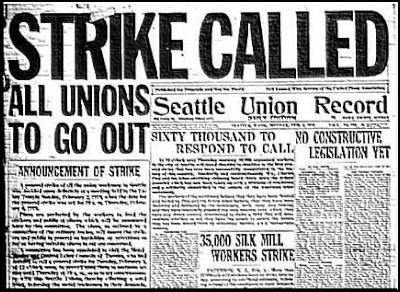
1. General Strike: History teaches us that nothing strikes fear into the hearts – and pocketbooks – of the powerful like people stopping business as usual. In the event of a stolen election, local and national work stoppages, school walkouts, protests, and other actions communicate to the government, to corporate interests, to Bertha and to the world that we will fight the decimation of democracy. If they haven’t already, labor unions, political organizers, bloggers and individuals should coordinate a global effort so that business stops, not just in the U.S., but also around the world. Even without a strong labor movement, the immigrant rights mobilization of 2006 – the largest simultaneous marches in U.S. history – proved that you can make a powerful statement simply by not showing up to work and marching instead.

http://img.scoop.co.nz/stories/images/0708/86ebdaa9fbd70a9d6c4b.jpeg

2. Study the Florida Experience and Learn: We should study how, with a few notable exceptions, the Democrats allowed themselves – and our political future - to be dragged into the abyss of illegitimacy.

3. Foment Any and All Non-Violent Action: – As our country starts taking on the economic and political characteristics of El Salvador and other “Third World” countries that protested U.S. policy, our colossal crisis means we may have to start emulating their methods of protesting electoral and malfeasance: vigils, protests, hunger strikes, office takeovers (ie; government buildings), boycotts and other non-violent means.

Viewed from the historical perspective running from 2000 to the present - the view of Bertha Barrios’ generation - this election may, indeed, actually fit that clichéd slogan about this being the “most important election of our lives” not because we may elect Barack Obama, but because we must restore some semblance of integrity to our political process- and to ourselves.

thanks to: http://ofamerica.wordpress.com/2008/10/27/what-to-do-before-and-if-necessary-after-the-election-is-stolen/

and also, once again, to

for the heads up.


Saturday, October 25, 2008

A FEW HEALTCARE FACTOIDS


• A new survey shows that more than 25 percent said that housing problems resulted from medical debt, including the inability to make rent or mortgage payments and the development of bad credit ratings.

• Rising health care costs is the top personal pocketbook concern for Democratic voters (45%) and Republicans (35%), well ahead of higher taxes or retirement security.

• One in four Americans say their family has had a problem paying for medical care during the past year, up 7 percentage points over the past nine years. Nearly 30 percent say someone in their family has delayed medical care in the past year, a new high based on recent polling. Most say the medical condition was at least somewhat serious.

• A recent study by Harvard University researchers found that the average out-of-pocket medical debt for those who filed for bankruptcy was $12,000. The study noted that 68 percent
of those who filed for bankruptcy had health insurance. In addition, the study found that 50 percent of all bankruptcy filings were partly the result of medical expenses. Every 30 seconds in the United States someone files for bankruptcy in the aftermath of a serious health problem.

• One half of workers in the lowest-compensation jobs and one-half of workers in mid range-compensation jobs either had problems with medical bills in a 12-month period or were paying off accrued debt. One-quarter of workers in higher-compensated positions also reported problems with medical bills or were paying off accrued debt.

• If one member of a family is uninsured and has an accident, a hospital stay, or a costly medical treatment, the resulting medical bills can affect the economic stability of the whole family.

• A survey of Iowa consumers found that in order to cope with rising health insurance costs, 86 percent said they had cut back on how much they could save, and 44 percent said that they have cut back on food and heating expenses.

• Retiring elderly couples will need $200,000 in savings just to pay for the most basic medical coverage. Many experts believe that this figure is conservative and that $300,000 may be a more realistic number.

• According to a recent report, the United States has $480 billion in excess spending each year in comparison to Western European nations that have universal health insurance coverage. The costs are mainly associated with excess administrative costs and poorer quality of care. Although nearly 47 million Americans are uninsured, the United States spends more on health care than other industrialized nations, and those countries provide health insurance to all their citizens. The United States spends six times more per capita on the administration of the health care system than its peer Western European nations.

Friday, October 24, 2008

CONSTITUTIONAL QUIZ

1. You can be charged as a terrorist for political protest.
True: Eight protesters and journalists were charged as terrorists at the Republican National Convention. They could face seven and a half years in prison under the Minnesota Patriot Act for the mere act of planning to exercise their right to dissent.
BILL OF RIGHTS CHECK: You have the right to free speech.

2. The government has been copying all of your emails since 2005.
True: The NSA has over 20 copying stations inside of major Internet hubs run by Verizon, ATT and Comcast. The government has been copying all of your emails without a warrant.
BILL OF RIGHTS CHECK: They need a warrant to search your stuff.

3. The President has the power to arrest you as an enemy combatant.
True: On his say so alone the President can arrest any American by calling you an enemy combatant. Under the Military Commissions Act you can be held for up to three years without trial.
BILL OF RIGHTS CHECK: You have a right to a speedy trial.

4. Torture is permitted by the Geneva Conventions.
False: “Under no circumstances whatsoever” is torture permitted under the Geneva Conventions, the international treaties governing the rules of war.
BILL OF RIGHTS CHECK: You have the right to a fair trial before a jury of your peers. In 2008, the Supreme Court recognized Habeas Corpus for Guantanamo detainees.

5. Reporters have the right to protect the confidentiality of their sources.
False: Josh Wolf went to Federal prison in 2006 for ten months for not turning over to the FBI videotape he had shot. He received the longest sentence in history of any American journalist imprisoned in the line of duty.
BILL OF RIGHTS CHECK: No law can restrict the rights of a free press.

6. A librarian can land in hot water for not telling the government what books you read.
True: A librarian from Connecticut is fighting the FBI, which is trying to use the Patriot Act to force him — without a warrant — to tell them what books people have checked out of the library.
BILL OF RIGHTS CHECK: The government needs a warrant to search your library records.

7. You can be detained on U.S. soil without access to a lawyer.
True: When you come back to the U.S. on an international flight, before you clear customs, you may be apprehended and held without access to a lawyer and treated as if you are not on U.S. soil.
BILL OF RIGHTS CHECK: You have a right to a lawyer.

8. The President may not send the Army into your house to take away your guns.
True: After Hurricane Katrina, the National Guard went into people's homes and took away homeowners own weapons illegally.
BILL OF RIGHTS CHECK: You have the right to bear arms.
The End Of America Movie
My America Project is a grassroots campaign that engages citizens in direct democracy with the documentary film, “The End of America.”

ya think?

"The troubled insurance giant American International Group already has consumed three-quarters of a federal $123 billion rescue loan, a little more than a month after the government stepped in to save the company from bankruptcy...The news comes as the company's new chief executive warned Wednesday that the government's financial lifeline may not be enough to keep AIG afloat."

Thursday, October 23, 2008

The End Of America Movie

Thousands of Troops Are Deployed on U.S. Streets Ready to Carry Out “Crowd Control”

Originally posted at Alternet.org

Members of Congress were told they could face martial law if they didn’t pass the bailout bill. This will not be the last time.

Background: the First Brigade of the Third Infantry Division, three to four thousand soldiers, has been deployed in the United States as of October 1. Their stated mission is the form of crowd control they practiced in Iraq, subduing “unruly individuals,” and the management of a national emergency. I am in Seattle and heard from the brother of one of the soldiers that they are engaged in exercises now. Amy Goodman reported that an Army spokesperson confirmed that they will have access to lethal and non lethal crowd control technologies and tanks.

George Bush struck down Posse Comitatus, thus making it legal for military to patrol the U.S. He has also legally established that in the “War on Terror,” the U.S. is at war around the globe and thus the whole world is a battlefield. Thus the U.S. is also a battlefield.

He also led change to the 1807 Insurrection Act to give him far broader powers in the event of a loosely defined “insurrection” or many other “conditions” he has the power to identify. The Constitution allows the suspension of habeas corpus — habeas corpus prevents us from being seized by the state and held without trial — in the event of an “insurrection.” With his own army force now, his power to call a group of protesters or angry voters “insurgents” staging an “insurrection” is strengthened.

U.S. Rep. Brad Sherman of California said to Congress, captured on C-Span and viewable on YouTube, that individual members of the House were threatened with martial law within a week if they did not pass the bailout bill:

“The only way they can pass this bill is by creating and sustaining a panic atmosphere. … Many of us were told in private conversations that if we voted against this bill on Monday that the sky would fall, the market would drop two or three thousand points the first day and a couple of thousand on the second day, and a few members were even told that there would be martial law in America if we voted no.”

If this is true and Rep. Sherman is not delusional, I ask you to consider that if they are willing to threaten martial law now, it is foolish to assume they will never use that threat again. It is also foolish to trust in an orderly election process to resolve this threat. And why deploy the First Brigade? One thing the deployment accomplishes is to put teeth into such a threat.

I interviewed Vietnam veteran, retired U.S. Air Force Colonel and patriot David Antoon for clarification:

“If the President directed the First Brigade to arrest Congress, what could stop him?”

“Nothing. Their only recourse is to cut off funding. The Congress would be at the mercy of military leaders to go to them and ask them not to obey illegal orders.”

“But these orders are now legal?’”

“Correct.”

“If the President directs the First Brigade to arrest a bunch of voters, what would stop him?”

“Nothing. It would end up in courts but the action would have been taken.”

“If the President directs the First Brigade to kill civilians, what would stop him?”

“Nothing.”

“What would prevent him from sending the First Brigade to arrest the editor of the Washington Post?

“Nothing. He could do what he did in Iraq — send a tank down a street in Washington and fire a shell into the Washington Post as they did into Al Jazeera, and claim they were firing at something else.”

“What happens to members of the First Brigade who refuse to take up arms against U.S. citizens?”

“They’d probably be treated as deserters as in Iraq: arrested, detained and facing five years in prison. In Iraq a study by Ann Wright shows that deserters — reservists who refused to go back to Iraq — got longer sentences than war criminals.”

“Does Congress have any military of their own?”

“No. Congress has no direct control of any military units. The Governors have the National Guard but they report to the President in an emergency that he declares.”

“Who can arrest the President?”

“The Attorney General can arrest the President after he leaves or after impeachment.”

[Note: Prosecutor Vincent Bugliosi has asserted it is possible for District Attorneys around the country to charge President Bush with murder if they represent districts where one or more military members who have been killed in Iraq formerly resided.]

“Given the danger do you advocate impeachment?”

“Yes. President Bush struck down Posse Comitatus — which has prevented, with a penalty of two years in prison, U.S. leaders since after the Civil War from sending military forces into our streets — with a ’signing statement.’ He should be impeached immediately in a bipartisan process to prevent the use of military forces and mercenary forces against U.S. citizens”

“Should Americans call on senior leaders in the Military to break publicly with this action and call on their own men and women to disobey these orders?”

“Every senior military officer’s loyalty should ultimately be to the Constitution. Every officer should publicly break with any illegal order, even from the President.”

“But if these are now legal. If they say, ‘Don’t obey the Commander in Chief,’ what happens to the military?”

“Perhaps they would be arrested and prosecuted as those who refuse to participate in the current illegal war. That’s what would be considered a coup.”

“But it’s a coup already.”

“Yes.”


Tuesday, October 21, 2008

Dear World, Please Confront America

by Naomi Wolf

Is it possible to fall out of love with your own country? For two years, I, like many Americans, have been focused intently on documenting, exposing, and alerting the nation to the Bush administration’s criminality and its assault on the Constitution and the rule of law – a story often marginalized at home. I was certain that when Americans knew what was being done in their name, they would react with horror and outrage.

Three months ago, the Bush administration still clung to its devil’s sound bite, “We don’t torture.” Now, Physicians for Human Rights has issued its report documenting American-held detainees’ traumas, and even lie detector tests confirm they have been tortured. The Red Cross report has leaked: torture and war crimes. Jane Mayer’s impeccably researched exposé The Dark Side just hit the stores: torture, crafted and directed from the top. The Washington Post gave readers actual video footage of the abusive interrogation of a Canadian minor, Omar Khadr, who was seen showing his still-bleeding abdominal wounds, weeping and pleading with his captors.

So the truth is out and freely available. And America is still napping, worrying about its weight, and hanging out at the mall.

I had thought that after so much exposure, thousands of Americans would be holding vigils on Capitol Hill, that religious leaders would be asking God’s forgiveness, and that a popular groundswell of revulsion, similar to the nineteenth-century anti-slavery movement, would emerge. To paraphrase Abraham Lincoln, if torture is not wrong, nothing is wrong.

And yet no such thing has occurred. There is no crisis in America’s churches and synagogues, no Christian and Jewish leaders crying out for justice in the name of Jesus, a tortured political prisoner, or of Yahweh, who demands righteousness. I asked a contact in the interfaith world why. He replied, “The mainstream churches don’t care, because they are Republican. And the synagogues don’t care, because the prisoners are Arabs.”

It was then that I realized that I could not be in love with my country right now. How can I care about the fate of people like that? If this is what Americans are feeling, if that is who we are, we don’t deserve our Constitution and Bill of Rights.

Even America’s vaunted judicial system has failed to constrain obvious abuses. A Federal court has ruled that the military tribunals system – Star Chambers where evidence derived from torture is used against the accused – can proceed. Another recently ruled that the president may call anyone anywhere an “enemy combatant” and detain him or her indefinitely.

So Americans are colluding with a criminal regime. We have become an outlaw nation – a clear and present danger to international law and global stability – among civilized countries that have been our allies. We are – rightly – on Canada’s list of rogue nations that torture.

Europe is still high from Barack Obama’s recent visit. Many Americans, too, hope that an Obama victory in November will roll back this nightmare. But this is no time to yield to delusions. Even if Obama wins, he may well be a radically weakened president. The Bush administration has created a transnational apparatus of lawlessness that he alone, without global intervention, can neither roll back nor control.

Private security firms – for example, Blackwater – will still be operating, accountable neither to him nor to Congress, and not bound, they have argued, by international treaties. Weapons manufacturers and the telecommunications industry, with billions at stake in maintaining a hyped “war on terror” and their new global surveillance market, will deploy a lavishly financed army of lobbyists to defend their interests.

Moreover, if elected, Obama will be constrained by his own Democratic Party. America’s political parties bear little resemblance to the disciplined organizations familiar in parliamentary democracies in Europe and elsewhere. And Democrats in Congress will be even more divided after November if, as many expect, conservative members defeat Republican incumbents damaged by their association with Bush.

To be sure, some Democrats have recently launched Congressional hearings into the Bush administration’s abuses of power. Unfortunately, with virtually no media coverage, there is little pressure to broaden official investigations and ensure genuine accountability.

But, while grassroots pressure has not worked, money still talks. We need targeted government-led sanctions against the US by civilized countries, including international divestment of capital. Many studies have shown that tying investment to democracy and human rights reform is effective in the developing world. There is no reason why it can’t be effective against the world’s superpower.

We also need an internationally coordinated strategy for prosecuting war criminals at the top and further down the chain of command – individual countries pressing charges, as Italy and France have done. Although the United States is not a signatory to the statute that established the International Criminal Court, violations of Common Article 3 of the Geneva Conventions are war crimes for which anyone – potentially even the US president – may be tried in any of the other 193 countries that are parties to the conventions. The whole world can hunt these criminals down.

An outlaw America is a global problem that threatens the rest of the international community. If this regime gets away with flouting international law, what is to prevent the next administration – or this administration, continuing under its secret succession plan in the event of an emergency – from going further and targeting its political opponents at home and abroad?

We Americans are either too incapable, or too dysfunctional, to help ourselves right now. Like drug addicts or the mentally ill who refuse treatment, we need our friends to intervene. So remember us as we were in our better moments, and take action to save us – and the world – from ourselves.

Maybe then I can fall in love with my country again.

Naomi Wolf, the author, most recently, of The End of America: Letter of Warning to a Young Patriot and the forthcoming Give me Liberty: How to Become an American Revolutionary, is co-founder of the American Freedom Campaign, a US democracy movement.

BUSH AND ADMIN MUST NOT BE PARDONED

The time is growing close and one of the things coming up is the traditional exiting wholesale pardoning of administration criminals.

DO NOT LET THIS HAPPEN!

As it stands now, Bush and others are liable for prosecution in any state that can claim a dead soldier. Any state who gave up one of their own as fodder for this war built on lies. Any family whose son's or daughter's body was used as a log on the fire of Bush's fund raising party for his friends.

If Bush and his admin are not brought to justice, how will America move on?

c.

Monday, October 20, 2008

Saturday, October 18, 2008


The news you're NOT getting at Fox.

AND SO IT BEGINS.....(Saturday morning Washington Post)

Thousands Face Mix-Ups In Voter Registrations
In New Databases, Many Are Wrongly Flagged as Ineligible

By Mary Pat Flaherty
Washington Post Staff Writer
Saturday, October 18, 2008; A01

Thousands of voters across the country must reestablish their eligibility in the next three weeks in order for their votes to count on Nov. 4, a result of new state registration systems that are incorrectly rejecting them.

The challenges have led to a dozen lawsuits, testy arguments among state officials and escalating partisan battles. Because many voters may not know that their names have been flagged, eligibility questions could cause added confusion on Election Day, beyond the delays that may come with a huge turnout.

The scramble to verify voter registrations is happening as states switch from locally managed lists of voters to statewide databases, a change required by federal law and hailed by many as a more efficient and accurate way to keep lists up to date.

But in the transition, the systems are questioning the registrations of many voters when discrepancies surface between their registration information and other official records, often because of errors outside voters' control.

The issue made its way to the U.S. Supreme Court, which yesterday blocked a challenge to 200,000 Ohio voters whose registration data conflicted with other state records.

It is impossible to know how many voters are affected nationwide. There are no reports of large-scale problems in Virginia, Maryland or the District, but the trouble is cropping up in many states.

In Alabama, scores of voters are being labeled as convicted felons on the basis of incorrect lists.

Michigan must restore thousands of names it illegally removed from voter rolls over residency questions, a judge ruled this week.

Tens of thousands of voters could be affected in Wisconsin. Officials there admit that their database is wrong one out of five times when it flags voters, sometimes for data discrepancies as small as a middle initial or a typo in a birth date. When the six members of the state elections board -- all retired judges -- ran their registrations through the system, four were incorrectly rejected because of mismatches.

As the gateway to voting, the new registration lists have become the focus of attention from many fronts, including voting rights advocates, officials concerned about fraud and political campaigns looking for an advantage.

It is "this season's big issue," said Wendy R. Weiser, who directs voting rights projects for the Brennan Center for Justice at New York University's School of Law, noting that efforts to keep names off the lists are "a new trend, not in the majority of states but in the battleground states."

The changes stem from the Help America Vote Act, passed by Congress in 2002 in the aftermath of the deadlocked presidential race two years earlier. The law provided millions of dollars for states to upgrade voting equipment and procedures, and to create the centralized databases, which allow voters in most states to check their registrations and polling places on the Internet.

The electronic lists have been coming online gradually, and for 31 states, this will be the first time they are used in a presidential election.

As the databases are implemented, voters' names and other information are verified against state driver's license records or Social Security records to determine their eligibility. Federal law allows each state to decide what constitutes a match -- whether it will accept nicknames, for example.

But states are not using "the best scientific knowledge known today" when they verify the information, said Herbert Lin, who is studying the issue for the federal Election Assistance Commission, which oversees election reforms.

By federal law, anyone whose name is flagged must be notified and given a chance to prove his or her eligibility. But voting rights experts say voters are not always alerted, and even if they are, some may decide to simply skip the election. If questions about eligibility remain on Election Day, those voters are entitled to cast a "provisional" ballot. But which of those ballots are ultimately counted depends on local and state rules.

Several of the battles over registration lists have taken on a partisan tinge, including in Montana, where a state GOP official challenged nearly 6,000 voters over apparent discrepancies in their addresses. He dropped his challenge after Democrats went to court, but not before one county sent letters to hundreds of voters informing them that their registrations were in jeopardy. Now the county is trying to let them know they are eligible to cast ballots after all.

The Republicans filed the case "with the express intent to disenfranchise voters," a federal judge said.

In light of the Supreme Court ruling yesterday, Ohio's Republican Party said it is looking at its options in state court to try again to force Secretary of State Jennifer Brunner, a Democrat, to produce lists of voters whose registration information conflicted with driver's license data or Social Security records.

Brunner called the court challenge "another partisan lawsuit." The state Republican chairman shot back that Brunner "continues to do everything she can to help her candidate."

Wisconsin Attorney General J.B. Van Hollen, who co-chairs John McCain's campaign in that state, is demanding that election officials use the database to re-verify the identities of voters who registered going back to 2006.

The elections board has refused, citing the database's error rate. The issue has gone to court, and a ruling is expected next week.

Among the errors with Wisconsin's database, which has been fully in place just since August, are incorrect ages for 95,000 voters, all of whom are listed as 108 years old. If no birth date was available when names were moved into the electronic system, it automatically assigned Jan. 1, 1900.

In court filings, Van Hollen said "tens of thousands" of ineligible voters could cast ballots, noting that Wisconsin "will be a swing state" whose 10 electoral votes "may be won by a very narrow margin."

The crush of new registrants around the country has heightened the problems, including in Colorado, where 22,000 must clear up questions about their addresses and other discrepancies before they can cast a regular ballot.

In Alabama, the centralized system triggered a new controversy over a constitutional ban on voting by people convicted of a felony crime of "moral turpitude." The governor's office in the past year issued a list of 480 crimes that meet the definition, including disrupting a funeral and conspiring to set an illegal brush fire.

Alabama's court administrator and attorney general issued a shorter list of 70 more violent and serious crimes. But Secretary of State Beth Chapman said the longer list was used to identify ineligible voters until three weeks ago.

Among those wrongly flagged by the database was former Republican governor Guy Hunt, who was driven out of office in 1993 after being convicted of a felony ethics violation for misusing inaugural funds. But Hunt, 75, received a pardon that declared him innocent a decade ago.

"Well, he's voted ever since the pardon, so he sure shouldn't be on any list now," said Hunt's son, Keith, in a telephone interview.

The former governor, who has run for office since he was pardoned, was included on a "monthly felons check" sent to a county registrar this year. The document, obtained by The Washington Post, contains 107 names of purported felons, but 41 of them committed only misdemeanors, according to the handwritten notations of a county staffer.

Chapman, a Republican, stressed that any ban can be appealed. But state Sen. Zeb Little (D), who has reviewed other cases, said, "I am certain that people will be turned away at polls in November over this for no valid reason."

In Georgia, the database has so far labeled 2,600 people as noncitizens.

That nearly cost American-born Nelson Tyler, a civilian contractor in Afghanistan, his vote. The system mistakenly tagged Tyler when a Social Security number popped up belonging to a noncitizen.

After receiving a letter from DeKalb County saying he had to prove his citizenship, Tyler protested and resubmitted his number. Within days, he got an e-mail apologizing for the mix-up. In it, a county elections official said she had told her staff not to rely solely on the database when verifying ballot requests because "we had found it was not 100% accurate."

Tyler cast his absentee ballot, but he said in an interview that the experience was unsettling. The closer the elections get, he said by e-mail, "the more these types of disqualifying tactics begin to rear their ugly heads."

Thursday, October 16, 2008

here is the text, readable:

America’s health care system is failing. It denies care to many in need and is expensive,error-prone and increasingly bureaucratic. Despite abundant medical resources, care is often inadequate because of the irrationality of our insurance system. Yet our political leaders seem intent on reprising failed schemes from the past, rejecting the single-payer national health insurance model that is the sole hope for affordable, comprehensive coverage.


Single payer reform could realize administrative savings of more than $300 billion annuallyenough to cover the uninsured and to eliminate co-payments and deductibles for all Americans. It would also slow cost increases by fostering coordination and planning. The incremental changes suggested by most Democrats cannot solve our problems; further pursuit of market-based strategies, as advocated by Republicans, will exacerbate them. What needs to be changed is the system itself.


We urge our political leaders to stand up for the health of the American people and implement a nonprofit, single-payer national health insurance system.

READ MORE AT: http://pnhp.org/


debilitating debate

I’m weary of references to Joes with surnames like Six-Pack and Plumber. I’ve had it with references to Main Street. I don’t live on Main Street. I don’t know anyone who can afford to live on Main Street.


I am exhausted by this dance, and so, so tired of hearing what is wrong with the other guy, which exercise generally only serves to underline the weaknesses of the owner of the pointing finger.

Tell me (which you have not, neither of you, though prompted many times) which of your expensive promises will be made to fall by the wayside because of the “bailout.”


Tell me if when you are elected you will pardon Bush and Cheney and the rest for their crimes. Tell me if you will revoke and disable the special powers Bush has installed for the man in the oval office.


It is called Campaign Rhetoric for a reason. Rhetoric it is, and that is all. It’s the smell of cooking coming from a secret kitchen, all full of wonderful promise. But the proof is in the eating, and we need be mindful that sometimes what is finally served at the table bears little resemblance to what was imagined, can be unpalatable and, worse, contain little to no actual nourishment.

c.

Wednesday, October 15, 2008

LIE: "We don't torture."

On NPR this morning:
A pair of classified memos from the Bush administration have surfaced showing the executive office endorsed the use of harsh interrogation techniques, including waterboarding. Alex Chadwick talks to Washington Post investigative reporter Joby Warrick about the memos.

LISTEN HERE: A. Chadwick/J. Warrick

be there or be square

So what can we expect tonight? Very exciting possibilities. Will McCain be flanked by bodyguards as protection against that VERY DANGEROUS guy he'll be sharing the stage with? Will Obama offer us $100 each to vote for him? Will Palin leap from the audience and sink those pitbull teeth into Obama's leg, screaming "GOT him Johnny - I GOT him! You betcha! [wink]" Will Ralph Nader show up uninvited and make all the rest of them look like the timid, dishonest, self-serving idiots that they are?

I'll be watching with my bottle of Corona. But I don't think it'll be enough.
c.

Monday, October 13, 2008

McCain Appeals to the Worst in Us

Okay, so the vid below is a joke but - is it really? When I hear the McCain crowds cheering and jeering it sounds to me more like ringside at a boxing match. Or a hockey game. "Kill him," somebody yells - and no one replies. No one corrects. No - it is encouraged.

What next?
c.

Saturday, October 11, 2008

who loses


DO YOURSELF A FAVOR: visit http://www.votenader.org/issues/

Friday, October 10, 2008

from "DEMOCRACY NOW!"

New Documents Reveal “Effort to Create a Gitmo Inside the United States”

Newly released military documents show a US Naval officer warned the Pentagon in 2002 that an American detainee was being driven nearly insane by months of punishing isolation and sensory deprivation in a US military brig. The detainee, Yaser Hamdi, was one of two US citizens held on a Navy brig in South Carolina for years without charge after the Sept. 11 attacks. The documents show that the US military exported the brutal interrogation techniques from Guantanamo prison to the US jail housing Hamdi and Jose Padilla. The techniques included sleep and sensory deprivation, prolonged isolation and death threats. Jonathan Hafetz of the ACLU said, "These documents are the first clear confirmation of what we’ve suspected all along, that the brig was run as a prison beyond the law. There was an effort to create a Gitmo inside the United States.”

Wednesday, October 8, 2008

"CLEAN" coal??


“Coal produces 50 percent of our electricity, and it will take some time to phase that out. The point is that every dollar that we invest in clean—or in coal technology, in the coal industry infrastructure, is a dollar that is better invested in solar and wind. We know—we know that the future economy has to be powered by clean energy. Why not go all in for clean energy today, rather than continuing to perpetuate our addiction to the dirtiest fuel on the planet?”

“You can go to followthecoalmoney.org and find out who are the largest recipients of coal industry cash. You can go to followtheoilmoney.org and find out who are the largest recipients of oil industry cash.

To get clean energy, we’re going to need a clean government. And we won’t be saved by either administration. And so, come January 20th, if you’re a progressive activist looking to create a clean energy future, you have to get to work. “

Michael Brune, executive director of Rainforest Action Network and author of the new book Coming Clean: Breaking America’s Addiction to Oil and Coal. In an interview with Amy Goodman of Democracy Now!

Saturday, October 4, 2008

Friday, October 3, 2008

say what?

My major impressions of last night’s debate:

  1. Palin cannot pronounce the word “nuclear” but she can definitely pronounce “maverick,”[1] and did so - six times before I stopped counting.
  2. Everybody’s talking about what may have gone wrong in Iraq and nobody’s talking about how we got there, on the basis of the LIE told by G. Bush that Saddam was an immediate threat to the U.S.
  3. Biden missed a good opening when Palin was talking about her "management experience" as Mayor - considering the fact that the job was actually done by someone other than her [a full-time city administrator].

[1] Maverick: An unbranded range animal, especially a motherless calf; it can also mean a person who thinks independently; a lone dissenter; a non-conformist or rebel.

(She’s not the latter so must be referencing the former.)

c.

Wednesday, October 1, 2008

CONGRESS....WHO NEEDS 'EM?

Hmmm...
Sound like anyone else we know?